Pages

Showing posts with label walking tour. Show all posts

Thursday, August 16, 2018

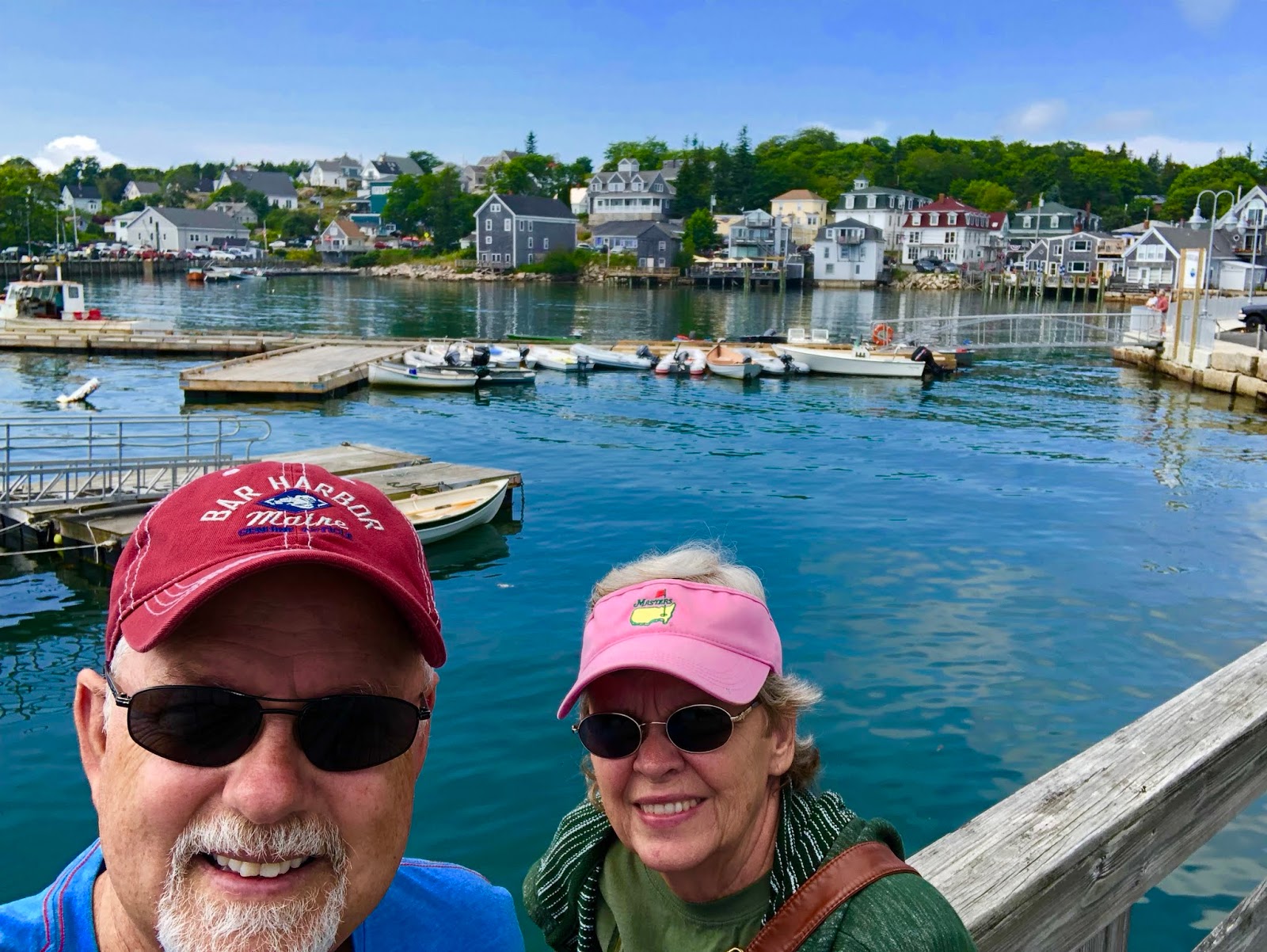
The Lobster Capital of Maine - Stonington

We spent the day over at Stonington, ME.  It took about an hour to get over there from our Forest Ridge Campground in Ellsworth, ME, on some smaller county and state roads.

It was foggy much of the day but we had glimpses of some interesting things.

First we came upon a Produce Market and had to stop.
There were a mix of crafts and produce on display.
I stopped for a few moments and talked with the owners of the VW pickup truck who brought some produce to the market.
The guy in the green sweatshirt was the owner of the 1964 VW.  It had been completely restored and painted and had the nice canvas cover over the top.  It was a real beauty and had been in his family for a long time.  I asked how it did on the road and he said it could even get up to 50 mph!

Next, on to Stonington.
Our new friends Randy and Pat recommended the quaint little town and we found it to be a great day trip.  It immediately looked like a Maine fishing town.
There were boats in the harbor and a number of working warehouses in site on the water.

The town is small and we drove through it on Main Street before turning around and finding a parking place.  Parking is free so that was nice.  Just like most of the parking in Bar Harbor.

Our first order of business was to find a place for lunch.  We looked at this little row of cottages and the restaurant associated it.  But we went inside and waited for a table only to find out it was a private dining area for guest at these quaint cottages.  Yikes!

 The fog was rolling in and out and we opted for an inside restaurant on Main Street.
The bay window was a great place to see the bay, enjoy the meal and chat with some other vacationers in the restaurant.
The sights in town were another exclamation mark in our Northeast Trip.
 After lunch, we strolled down to the wharf and went to the Maine Center for Coastal Fisheries.
Here's what their website says about the mission and purpose:
Maine Center for Coastal Fisheries is a non-profit organization that works to secure a diversified fishing future for the communities of Eastern Maine and beyond. We do this by developing and implementing innovative programs that provide value for today’s fishermen and drive more sustainable management approaches for future fisheries. An essential component of our work is connecting the knowledge of fishermen, the findings of scientists, and the world of policy makers.

We talked with Sam, an intern from Iowa who showed us samples of some of the fish life on display.
We saw a purple lobster, crabs, mussels and some other sea creatures.
A manager at the facility said that the working warehouse in town were really busy and harvesting a lot lobster.  In 2017, they had a banner year with over 20,000,000 pounds of lobster in Stonington alone.  An average year is about that for the entire state of Maine.

It was a beautiful warm day and we really just walked around and enjoyed the small town feeling on the waterfront.  It was surprising to me that there was not a larger commercial advertising presence.  The only sign I saw that named the town as the biggest lobster port in Maine (and therefore the world?) was the small sign at the edge of town.

I suppose, to their credit, they liked the small town atmosphere and were willing to put up with the high traffic in the summer time, but at the same time they didn't want to bring in huge numbers of tourists and change the culture.

Before we left the area, we drove around the outskirts of town and saw some neat neighborhoods with little homes perched on the side of the hills for good views of the harbor.
We also came upon a large boat repair facility with a huge boat mover.
The whole contraption was being 'driven' by a guy who was walking behind it and operating it from a remote control joystick.  We don't see that every day!

We loved our time in Stonington.  It was a memorable day.
This definitely was a 'find' and a great way to spend the day.  Seeing Stonington was a bit of change from Bar Harbor and Acadia and a chance to see an interesting place.

Thanks for joining us today on the Roadrunner Chronicles!


Tuesday, July 17, 2018

A Bit of Yorktown History


Years ago, we visited Yorktown, but never visited the Colonial National Historical Park.  We picked a beautiful day and arrived about 30 minutes after it opened.
While we waited for the start of the 16-minute overview film of the Yorktown Historical site "The Siege at Yorktown".
Yorktown was established as a 50 acre plot of land designated in 1691 by an Act for Ports passed by the Virginia House of Burgess.  It had a customs house for the purposes of collecting taxes on shipments along the York River.

It had a population of about 1800 people by the early 1700's and with the primary cash crop of tobacco being grown and shipped out of the region.

Even before the colonial declaration of Independence in 1776, relations with Britain were locked in skirmishes of the Revolutionary War.  In 1780, French forces landed near Rhode Island to aid their American friends.  At sea, the French fleet blockaded the Chesapeake, depriving British forces an avenue of escape.

British General Cornwallis moved his army toward Yorktown to establish a naval base there. With a force of 8,300 men, he fortified the town and prepared for battle against the larger French and colonial forces near Williamsburg that was close to 17,000.

The allied forces began a nine-day round-the-clock bombardment of Yorktown pinning Corwallis and his army down with no escape.  Cornwallis requested a cease-fire to discuss surrender terms  and on October 19, 1781 he formally surrendered his army
We walked through the museum and then down to path to the area of old Yorktown.
The pathway made for an easy walk.  I like the detailed maps along the way.
About 500 yards down the path toward town, the Victory Monument.  With the defeat of Cornwallis, citizens immediately knew the significance of the event.  News reached the Continental Congress a few days later and on October 29, 1781 directed that a monument be erected.
In what may be the slowest construction plan in history, the cornerstone was not laid until October 1881.
As we continued on the walking tour, we passed the Nelson House.  Thomas Nelson Jr. was one of Yorktown's influential citizens.  He was a signer of the Declaration of Independence and owned this home that was built by his grandfather in about 1730.
We walked up the steps and onto the property and found a few shaded benches in the back of the house overlooking an active garden that was being tended by a volunteer.
It was time for lunch and had a picnic.  It's been fun to remember all the places we've packed a lunch and enjoyed the surroundings all over the country.  This simple pleasure has brought us great joy as we've been to different places and soaked in the history and surroundings. 
This home was built in the Georgian architecture style, named after the British kings by that name.
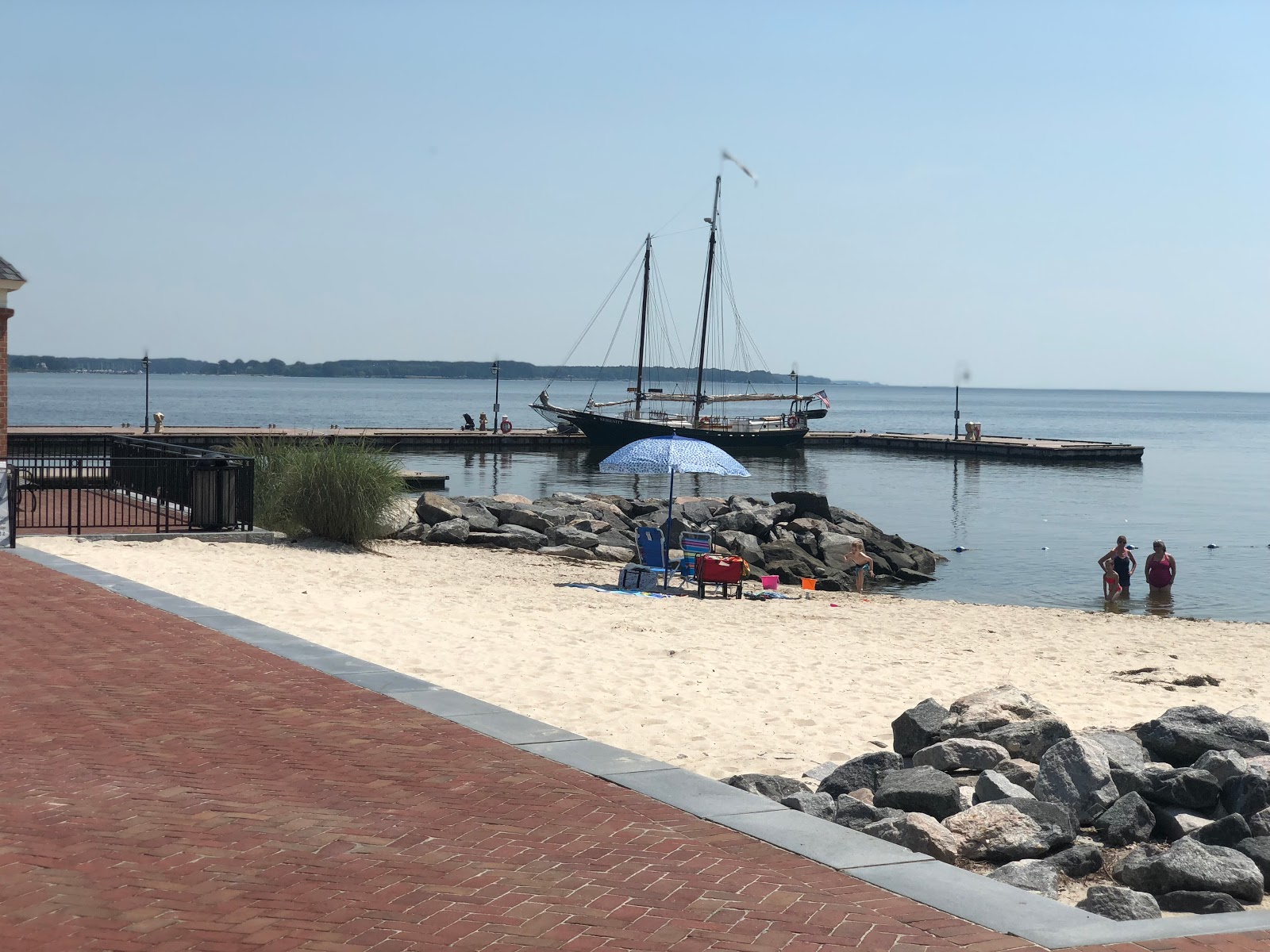
We wandered down the lane of old homes and taverns and walked over to the Yorktown Beach.  This was a surprise.
The Riverwalk Landing is nice little city park with public facilities and a shaded tree line with park benches.  It overlooks the wharf and the York River.

After some time at the Riverwalk Landing, we looked at the city map and found the nearest trolley stop to get back to the Visitor Center.  It was heating up and getting a little humid, but it was a great day in Yorktown.

We felt like we added a little more understanding of the early days in our country.

Thanks for joining us on the Roadrunner Chronicles!